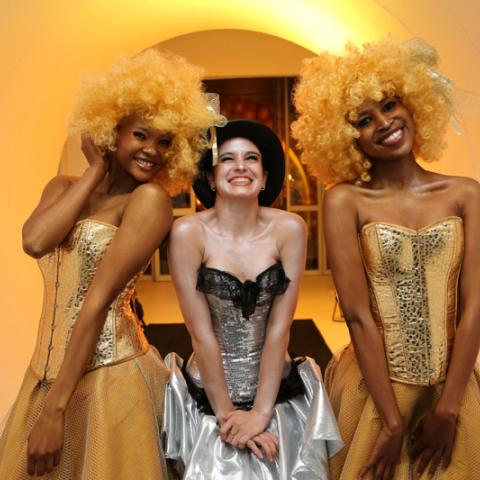
Many corporate event theme ideas are born in a boardroom at 4pm on a Friday, about 11 minutes before someone says “Great Gatsby”. Six weeks later, there’s a gold sequin backdrop, a feather boa in every third photograph and 300 guests who have attended this exact evening four times already.
An event theme does far more than anyone gives it credit for. It decides the venue shortlist, the lighting plot, the menu, the music, the script, the signage and whether the CEO’s opening line lives or dies. Chosen well, it makes a hundred smaller decisions for you. Chosen badly, it becomes an expensive costume draped over an event that had a big budget and nothing to say.
Strong corporate event theme ideas start with the objective
Themes get selected the way people choose paint colours: by looking at pretty things until one of them feels “right”. This order should be reversed. Before anyone dares to open Pinterest, the brief should answer one question: what should guests leave thinking, feeling or doing?
An awards evening built to reward a sales team that has had a punishing year needs a completely different emotional temperature to one celebrating a rebrand. A conference launching a three-year strategy needs a theme that can carry an idea for eight hours, survive four breakaway sessions and still make sense in the closing plenary. A product launch needs a theme that gets out of the product’s way.
Try this: Write your objective as one sentence and then hold every theme suggestion against it. If the theme doesn’t advance that sentence, it’s decoration. Decoration is fine, but it not be mistaken for strategy.
Using the “lift test” for strong conference theme ideas
Imagine a delegate describing your event to a colleague who didn’t attend, in one sentence in a lift, while distracted. Does the description still sound worth the time?
Weak conference theme ideas fail this test immediately, because they’re categories rather than ideas. “Innovation”, “Excellence” and “Growth 2027” are all the beige wallpaper of corporate events – they’re impossible to object to, impossible to remember and equally applicable to a mining conference or a yoghurt brand.
Themes that pass the test tend to make a small argument. Something like Built to Bend for a year about operational resilience, or Fewer, Better for a strategy reset that involves killing off half the product line. The delegate can repeat it, and the repetition carries meaning. Speakers can write towards it, and the set design has something specific to express beyond the corporate colour palette.
Try this: Name the theme in three words or fewer, using a verb where possible. Verbs imply direction; nouns suggest a filing cabinet.
Gala dinner theme ideas that go beyond a dress code
“Black and gold” tells guests what to wear. That’s a logistics instruction and it leaves the entire evening undecided. The most effective gala dinner theme ideas anchor on one sensory decision and push it relentlessly through every touchpoint.
Three anchors that consistently produce distinctive evenings:
- A single material, like brass, raw linen, smoked glass or charred wood, gives the styling team, the print supplier and the caterer a shared vocabulary that no one has to interpret.
- A specific time of day, like golden hour, dictates colour temperature, which dictates lighting, which dictates photography, which dictates how the room feels the moment the doors open.
- A place with relevance, like the town where the company started or the port your products ship through, gives the MC actual material to work with. Specificity beats aspiration.
The test is whether the anchor sticks across arrival, table, plate, stage and exit. If a theme evaporates the moment guests sit down, the budget has gone into a photo opportunity in the foyer.
Borrow a rule from web accessibility for your event theme
The W3C’s accessibility guidelines recommend a contrast ratio of at least 4.5:1 between text and its background for standard-sized text. The technique exists to make sure people can read text placed over a background.
Although that benchmark was written for screens rather than for event signage, and has no formal authority over a printed directional board, it’s a remarkably useful sanity check. Charcoal typography on a deep navy step-and-repeat looks exquisite on a designer’s monitor and becomes unreadable at eight metres in a dimly lit foyer. Slate text on a slate keynote slide disappears on an LED wall from row 12.
The same logic applies to colour-coding. If your theme uses colour to indicate which delegates go to which breakaway room, a meaningful proportion of your guests will have some difficulty distinguishing between your carefully chosen jewel tones. Add a shape, a number or a word.
Try this: Photograph every signage proof on a phone, shrink it to thumbnail size and squint. If you can’t read it, neither can row 12.
Gala dinner and conference themes must survive the production schedule
This is where beautiful ideas collapse. Suspended installations need rigging points and weight-load certification. Live foliage needs water, refrigeration and a plan for the smell a full day in. Fire, water and anything involving sand will introduce you to the venue’s risk officer, who has opinions and a job to do.
The theme should be pressure-tested against load-in windows, ceiling heights, power phases and the entertainment programme before anyone presents a rendering to the client. A production team that runs this check early will tell you which 20% of the concept is causing 80% of the cost, and usually offer a version that photographs identically for a third of the price.
Try this: Cost the theme in three tiers before approval: hero, mid and background. Hero moments earn real money. Background elements should be achieved with lighting and repetition, which are the cheapest illusions in the business.
Corporate event theme ideas with a shelf life
Corporate event photography has an unusually long afterlife. It appears in annual reports, recruitment decks, LinkedIn posts and internal comms for years. So the useful question is how the room will look in a photograph three years from now.
Heavily trend-driven concepts age at the speed of the trend that produced them. Neon signage with a handwritten slogan, anything described as “immersive” without a clear reason for the immersion, mirror balls (which are currently enjoying another revival) – none of these are wrong, but all of them can date visibly.
Try this: Draw themes from the organisation’s own story, materials, geography or language, as they tend to age at the pace of the business rather than the pace of Instagram. They also have the useful property of being difficult for a competitor to replicate, since nobody else has your story.
Choosing corporate event theme ideas that earn their keep
The thread running through all of this is that a theme is a decision-making instrument wearing a party dress. It exists to make the next hundred choices faster, more coherent and more distinctive. The best corporate event theme ideas are those that keep working long after the styling has been dismantled, because they gave the event something to say.
Getting there takes a team that can hold the creative concept and the load-in schedule in the same conversation without one strangling the other. That’s the work 360 Degrees Production House does for a living: interrogating the brief, killing the ideas that won’t survive the venue and building the ones that will turn into something guests remember.
Have a look at what that turns into in practice and then bring us your objective (ideally before someone says “Great Gatsby”).